You're paying for the same product three different ways, and you don't even know it. The air fryer on your counter, the shoes in your closet, the supplements in your cabinet—they all traveled through a gauntlet of middlemen who each took their cut. This isn't conspiracy. It's just how retail works. But it doesn't have to be how you shop.
This guide will show you what's really happening between the factory and your doorstep, and more importantly, how to bypass the unnecessary layers when it makes sense.
How the Retail Supply Chain Increases Prices
Let's break down what actually happens when you buy something through traditional retail channels.
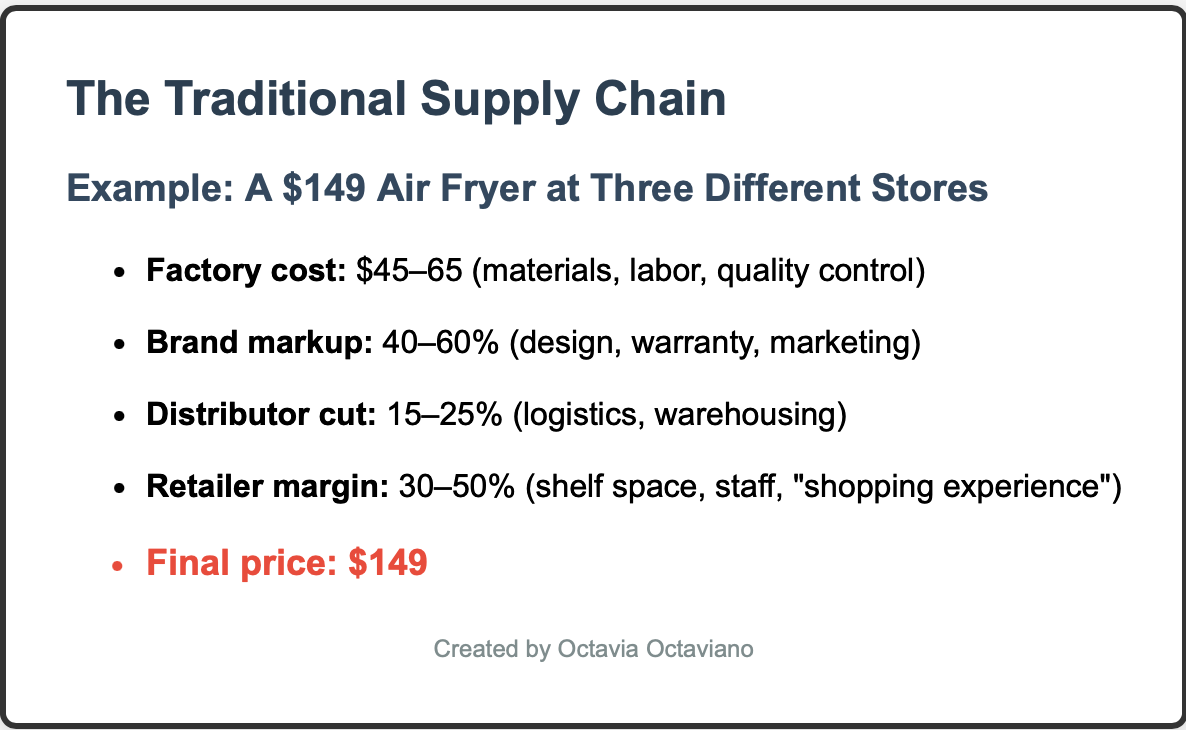
Here's the key insight: It's the same machine at Crate & Barrel, Williams-Sonoma, and Sur La Table. Same factory. Same box. Same warranty card. But three different retailers are extracting their cut for giving it premium placement, aspirational branding, and a carefully curated "lifestyle" vibe.
When you buy directly from the brand—especially with a promo code—you're potentially cutting out 2-3 layers of markup. That's why direct-to-consumer (DTC) brands have exploded in the last decade.
 Laura Seelinger
Why Middlemen Exist (And When They're Worth It)
Before we get into bypass strategies, let's be fair: middlemen aren't inherently parasitic. They provide real services.
What Retailers Actually Do
- Curation: They filter thousands of products so you don't have to research everything from scratch
- Physical access: You can touch, try, and test before buying
- Convenience: Everything's in one place with easy returns
- Trust layer: Brand reputation reduces purchase anxiety
- Immediate gratification: Walk out with the product today
The problem isn't that these services exist. It's that consumers often pay for them without realizing it and without needing them.
If you already know exactly what air fryer you want (you researched it online), don't need to see it in person (it's an appliance, not a couch), and can wait 3-5 days for shipping, why are you paying Williams-Sonoma's 45% retail margin?
The Direct-to-Brand Advantage
Buying directly from manufacturers or brands gives you several underrated benefits beyond just price.
1. Better Warranty Handling
When you buy from Philips.com instead of a retailer, your serial number is already in their system. If something breaks, you're not caught in the "call the store / no call the brand" loop. You're already a direct customer.
2. Wholesale-Adjacent Pricing
Brand-direct sites often run promotions that bring you closer to wholesale pricing, especially during:
- End-of-quarter sales pushes
- Email subscriber exclusives
- Refurbished or "cosmetically imperfect" deals
- Abandoned cart recovery offers (yes, they track this)
3. Transparency
You know exactly who you're buying from. No weird third-party marketplace sellers. No counterfeit risk. No "fulfilled by" ambiguity.
Real Example: The $149 vs $81.86 Air Fryer
Google Shopping shows the Philips 3000 Series air fryer at $149.95 across Crate & Barrel, Williams-Sonoma, and Sur La Table.
Philips' own website with a promo code? $81.86 total after taxes.
Same SKU. Same warranty. Same box. 45% cheaper.
The only difference? You bypassed three layers of retail markup.
Pause here. Everything above explains the system. Everything below shows you how to move through it.
Strategies for Cutting Out the Middleman
1. Check Brand Sites First
Before buying on Amazon or at a retailer, visit the manufacturer's website directly. Sign up for their email list—first-time subscriber discounts typically range from 10-20%. Pro tip: Create an alias email account specifically for shopping deals to keep your main inbox clean.
2. Use Honey/RetailMeNot
Browser extensions that auto-apply promo codes at checkout. Brands often have active codes they don't advertise prominently.
3. Buy Refurbished from Brand
Factory-refurbished items from the brand itself are usually like-new with full warranties, at 30-40% off. Apple, Dyson, and KitchenAid all do this well.
4. Industrial/Restaurant Supply
For kitchenware, cleaning products, and some electronics, check restaurant supply stores. They sell to the public and skip the lifestyle markup.
5. Manufacturer Outlet Stores
Nike, Adidas, Le Creuset—many brands have outlet stores (physical or online) that sell overstock and last season's products at significant discounts.
6. Wholesale Clubs (With Caveats)
Costco and Sam's Club negotiate directly with brands and have thin margins. But you're limited to their curated selection.
When Middlemen Make Sense
Not every purchase should be optimized for price. Sometimes the retail markup is worth it.
Pay the Middleman Premium When:
- You need expert guidance: Buying your first DSLR camera? A good camera store with knowledgeable staff is worth the markup
- Immediate need: Your fridge died. You can't wait for shipping
- Physical fit matters: Shoes, clothes, furniture, mattresses—try before you buy
- Complex installation: Appliances that need professional installation often come with better service through retailers
- Supporting local businesses: Sometimes the intangible value of a local shop is worth the extra cost
Is Amazon a Middleman? Hidden Fees Explained
Here's where it gets tricky. Amazon feels like you're cutting out the middleman because it's online and convenient. But Amazon is often just a different kind of middleman—and sometimes a more expensive one.
Brands selling on Amazon face significant fees: 8-15% referral fees on every sale, plus FBA storage, picking, packing, and shipping costs that can add another 20-30%. Many brands also pay to advertise their own products in Amazon's search results. These costs get passed to you.
This is why you'll often find better prices on brand websites than on Amazon, even with Prime shipping factored in.
⚠️ Marketplace Risk
When you buy on Amazon, eBay, or Walmart.com, check who's actually selling. Third-party sellers can sell counterfeits (especially common with supplements, cosmetics, and electronics), engage in price gouging during shortages, and complicate warranty claims since brands may not honor warranties from unauthorized sellers.
Category-Specific Strategies
Electronics & Appliances
Best approach: Research on Amazon/reviews → Buy from brand's website with promo code or refurbished section
Why: Serial numbers registered directly, better warranty support, often cheaper with email signup discounts
Clothing & Footwear
Best approach: Try on in-store → Buy online from brand during sales
Why: Fit matters, but once you know your size, brand websites have better selection and deeper discounts than department stores
Groceries & Consumables
Best approach: Costco for staples, direct-to-consumer subscriptions for specialty items
Why: Bulk buying and subscription models cut out distribution markup
Furniture & Home Goods
Best approach: Visit showrooms → Order from manufacturer if possible, or during major sales
Why: Shipping costs and assembly matter. Retailers sometimes offer better delivery/setup services
Supplements & Health Products
Best approach: ALWAYS buy directly from brand's website
Why: Counterfeiting is rampant on marketplaces. Amazon has had significant issues with fake supplements
The Psychology of Retail Markup
Understanding why we willingly pay more helps us make better decisions.
The "Premium Vibes" Tax
Williams-Sonoma charges more than Target for the same KitchenAid mixer. Why? Because their store feels more premium. Softer lighting. Nicer displays. Staff in aprons. You're not just buying a mixer—you're buying the feeling that you're the kind of person who shops at Williams-Sonoma.
This isn't inherently bad. Sometimes we want that experience. But recognize it for what it is: you're paying for feelings, not function.
The Convenience Premium
We pay more for same-day delivery, for stores that are open late, for not having to plan ahead. Again, not inherently wrong—your time has value. But if you're tight on money and long on time, planning purchases a week ahead can save 20-40%.
The Trust Tax
We pay more at established retailers because we trust they won't screw us. Return policies are clear. Customer service exists. This is actually one of the more justified markups—peace of mind has real value.
The key is: know which premium you're paying and decide if it's worth it for this specific purchase.
Advanced Tactics: Gaming the System
The Abandoned Cart Trick
Add items to your cart on a brand's website, enter your email at checkout, then abandon it. Many brands will send you a discount code within 24-48 hours to entice you back. (10-20% discounts are common.)
Price Matching
Many retailers will match competitor prices or even their own online prices. Found it cheaper at Walmart.com than in the Walmart store? They'll usually match it. This lets you get the best of both worlds: low online price + immediate in-store pickup.
Student/Military/Professional Discounts
Brands offer unadvertised discounts for students, military, teachers, healthcare workers, and other groups. Platforms like StudentBeans and UNiDAYS let you browse and access these deals in one place—just verify your status once and unlock hundreds of discounts. While most retailers don't allow stacking with other promotions, always compare the verified discount to any ongoing sales to find the better deal.
Credit Card Rewards
Some credit cards give 5% back at Amazon, others at grocery stores, others on everything. Strategic use can effectively create your own discount on every purchase. For example, if you spend $1,000 per month on a 2% cash-back card, you'll earn $240 annually—$720 if you spend $3,000 monthly.That's real money back in your pocket.
The Ethical Dimension
There's a tension here worth acknowledging: small businesses and local retailers are middlemen too. When you bypass them, they suffer.
A framework to think about this:
When to Support the Middleman
- They add genuine value: Expert advice, curation, community
- They're local and vulnerable: Independent bookstores, local hardware stores
- They support good jobs: Fair wages, decent working conditions
- You can afford it: Sometimes paying more is the right thing to do
But here's the thing: Williams-Sonoma is not a vulnerable local business. They're a publicly traded corporation optimizing for shareholder returns. Feeling guilty about bypassing them is misplaced empathy.
Save your premium dollars for businesses that genuinely need your support and provide real value beyond just having stuff on a shelf.
The Future: Radical Disintermediation
We're moving toward a world where middlemen become increasingly optional.
- DTC brands: Casper, Warby Parker, Allbirds—built entire businesses on cutting out retail
- Factory-direct platforms: Alibaba lets you buy directly from Chinese factories (for those willing to navigate it)
- Subscription models: Dollar Shave Club, HelloFresh—consistent direct relationships
- Social commerce: Brands selling directly through Instagram and TikTok
The power is shifting to consumers who are willing to do a bit of research and planning. The ones who aren't? They'll keep paying the convenience premium, and that's fine—it's a choice.
Becoming a Conscious Consumer
The goal isn't to optimize every purchase for maximum savings. That's exhausting and joyless. The goal is awareness.
Know what you're paying for. Know when the markup is worth it and when it's not. Know that the three "different" retailers showing the same product at the same price aren't competing—they're all extracting their cut from the same supply chain.
The middleman economy isn't going away. But your participation in it can become a lot more intentional.
The Core Principle
Every layer between the factory and your hands costs money. Pay for the layers that add value to you. Skip the ones that don't.
That air fryer purchase that sparked this guide? That wasn't just about saving $67. It was about seeing the system clearly and choosing to engage with it differently.
You can't unsee it now. And that's the point.
Once you see the layers, every purchase becomes a choice instead of a habit.